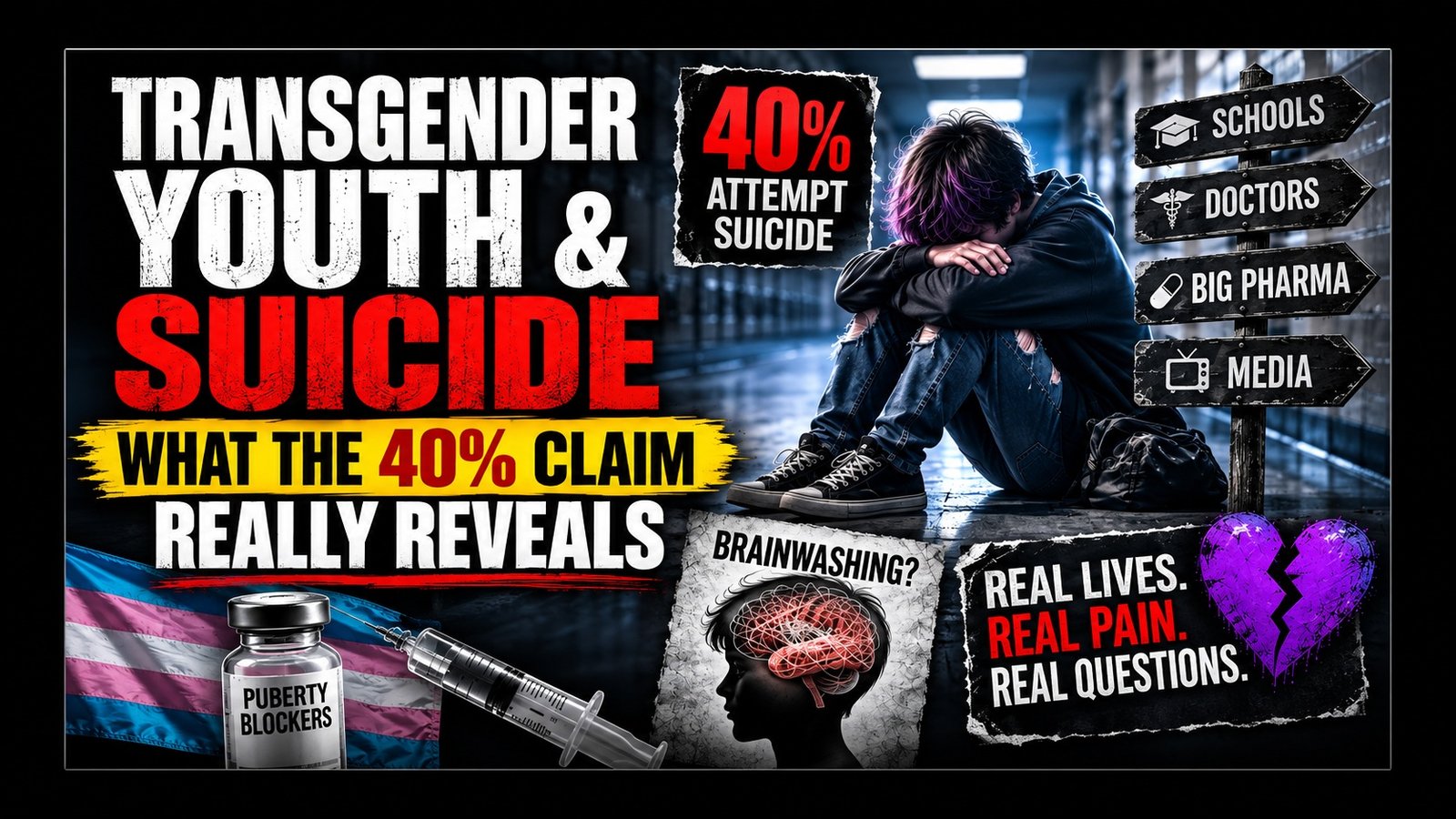
The suicide crisis among transgender and gender-diverse youth is one of the most controversial and difficult issues in modern American medicine.
Some studies have reported extraordinarily high levels of suicidal thoughts and suicide attempts among transgender youth.
But what do those numbers actually mean—and what explains the disparity?
In this CobraHunt Investigation, we examine the evidence behind the frequently cited “40%” suicide-attempt statistic, the research surrounding transgender youth mental health, and the fierce debate over gender identity, social influences, medical treatment and the role of schools, healthcare providers and pharmaceutical companies.
In This Investigation:
Where the widely cited 40% statistic comes from What researchers actually measure when they report “suicidality” The difference between suicidal thoughts, suicide attempts and suicide deaths
Why transgender youth show substantially elevated mental-health risks The debate surrounding gender dysphoria and adolescent development Puberty blockers and the evidence surrounding their mental-health effects Gender-affirming medical treatment and competing interpretations of the research
Questions surrounding pharmaceutical interests and medical decision-making
The role of family support, social stigma and mental health What researchers know—and what remains uncertain
Why simplistic explanations may obscure a much more complicated problem Research has consistently found elevated rates of suicidal ideation and attempts among transgender youth.
A large 2019 study published in Pediatrics found higher odds of multiple suicidality outcomes among transgender adolescents compared with cisgender adolescents.
At the same time, the causes of that disparity are complex.
A 2020 Pediatrics study found an association between access to pubertal suppression and lower odds of lifetime suicidal ideation among transgender adults who had wanted that treatment, while acknowledging the limitations of the study design.
So the central question of this investigation isn’t simply “Who is right?”
It’s: What does the evidence actually show—and what questions remain unanswered? Watch the full investigation and examine the evidence for yourself.
CobraHunt — Truth Has Fangs.