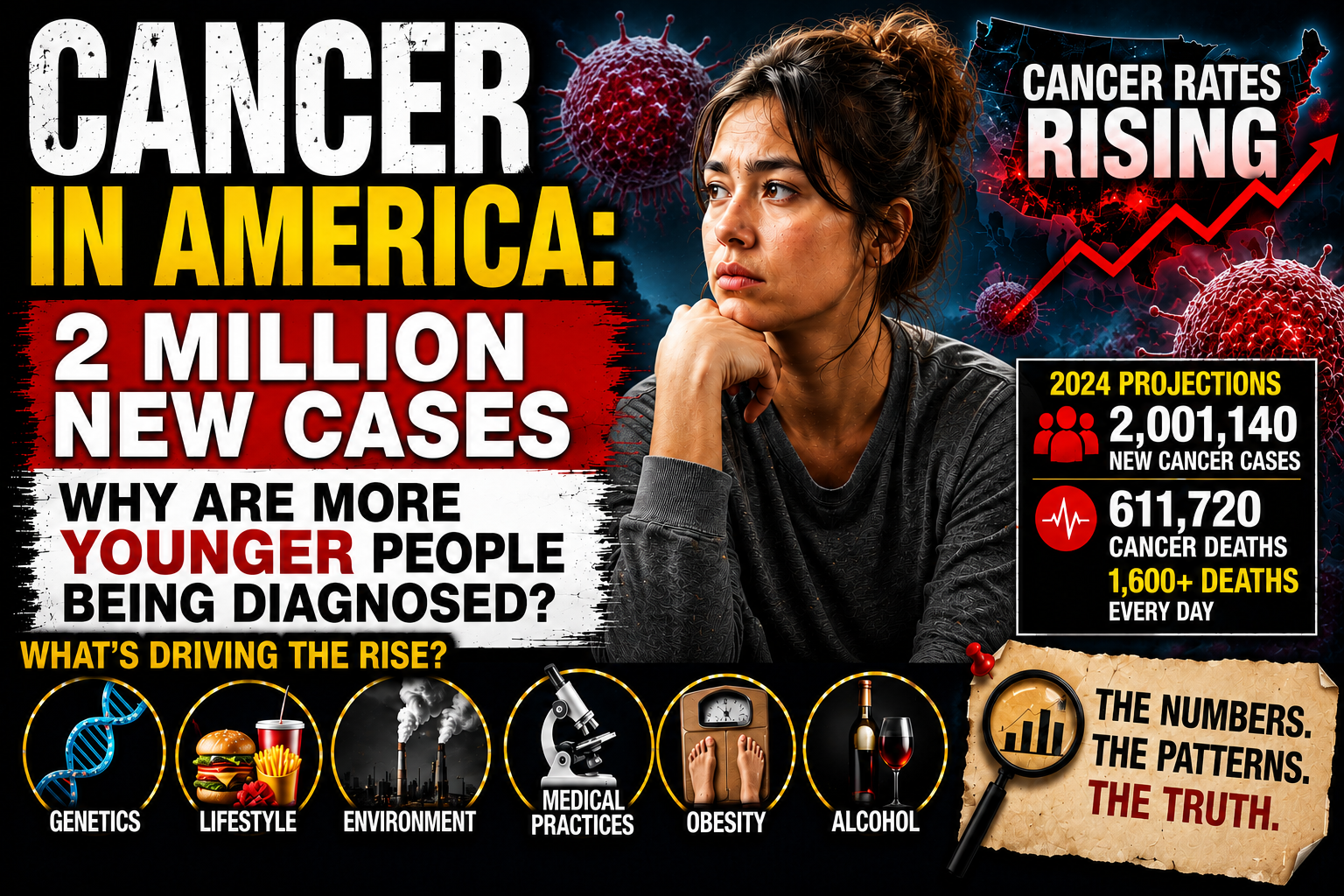
Cancer in America: 2 Million New Cases—Why Are More Younger People Being Diagnosed?
In 2024, the United States reached a troubling milestone: the American Cancer Society projected more than 2 million new cancer cases in a single year—approximately 5,500 diagnoses every day.
The same report projected 611,720 cancer deaths, or more than 1,600 deaths every day. But behind those enormous numbers is another question that deserves investigation:
Why are certain cancers increasingly being diagnosed in younger Americans?
This investigation examines the numbers, the trends and the possible explanations behind America’s changing cancer landscape.
In This Investigation:
The significance of the 2 million-case milestone
The projected 611,720 cancer deaths in 2024 Which cancers are increasing
The rise of early-onset cancer among people under 50
The troubling increase in early-onset colorectal cancer
Possible lifestyle, environmental and genetic factors The role of obesity and alcohol consumption
Changes in screening and earlier detection
What researchers know—and what they still don’t know Why there may not be a single explanation for the trend The National Cancer Institute reported that incidence increased for 14 of 33 cancer types in at least one younger age group between 2010 and 2019. However, researchers also found that overall cancer incidence and cancer death rates did not increase across younger age groups as a whole.
That distinction matters. There are legitimate reasons to investigate the rise in specific early-onset cancers, but determining why those cancers are increasing requires separating documented trends from speculation.
NCI researchers say possible contributors include changing risk factors, screening and detection practices, and other factors—and emphasize that definitive answers remain elusive. The numbers are real.
The questions are real. And the investigation continues. Watch the full report and examine the evidence behind one of America’s most important and unsettling health trends.
CobraHunt — Truth Has Fangs.
This video is for informational and documentary purposes only and is not medical advice. If you have concerns about cancer risk, symptoms, screening, or prevention, consult a qualified healthcare professional.