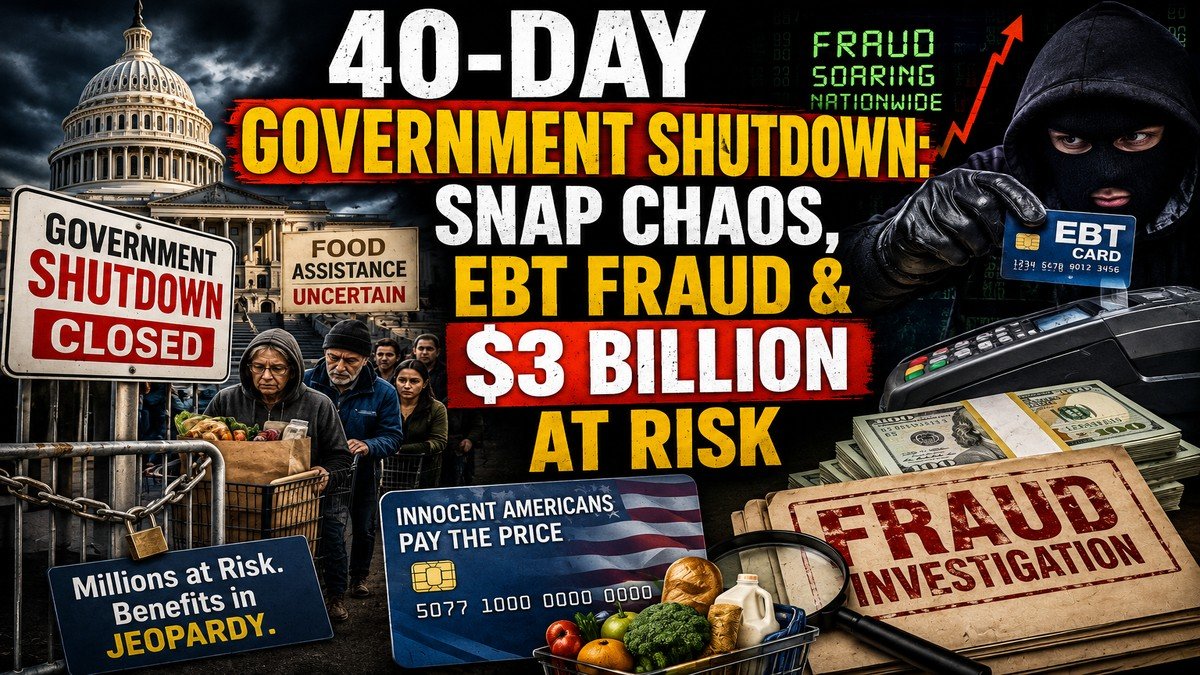
A government shutdown went 40 days — and millions of Americans who rely on food assistance are caught in the middle. While agencies warn of possible SNAP and EBT disruptions, food stamp fraud is soaring nationwide.
Is this just chaos… or a strategic move? In this investigation, we break down:
• How a shutdown can suspend or delay food aid
• Why fraud rings are draining billions from taxpayers
• Who controls the funding — and who benefits from the crisis
• The real risk for families, veterans, and seniors relying on food programs Some experts say this is political pressure.
Others believe food aid is being weaponized during shutdown negotiations.
Either way, the impact is massive. Watch until the end — the numbers and timeline may shock you.
A 40-day federal government shutdown put America’s food-assistance system under extraordinary pressure—and raised difficult questions about how vulnerable SNAP and EBT systems are to disruption, fraud and abuse.
At the same time, new USDA data has revealed potentially significant vulnerabilities inside the nation’s largest food-assistance program.
In May 2026, USDA reported that its preliminary analysis of SNAP eligibility data from 29 state agencies identified at least $3 billion per year in potential fraud, waste and abuse.
The agency emphasized that these findings are still being verified and that many of the discrepancies may involve errors or improper payments rather than confirmed criminal fraud.
That distinction matters.
This CobraHunt Investigation examines the shutdown, SNAP vulnerabilities and the growing problem of EBT fraud—and asks whether America’s food-assistance infrastructure is adequately protected.
In This investigation:
What happened during the 40-day government shutdown Why SNAP and EBT became a major concern
How a federal shutdown can affect food-assistance administration
The difference between fraud, waste, abuse and administrative error USDA’s preliminary $3 billion potential exposure
Duplicate SNAP records and questionable eligibility data EBT card skimming and card-cloning schemes Retailer trafficking of SNAP benefits How criminal organizations target EBT benefits What USDA and law enforcement are doing to combat fraud
Why program integrity matters to taxpayers and SNAP recipients
Whether America’s food-assistance system is prepared for another major disruption USDA says SNAP costs taxpayers more than $100 billion annually and has expanded efforts to detect recipient, retailer and EBT fraud.
The agency says criminals have used card skimming and cloning to steal benefits from Americans who depend on SNAP.
USDA has also reported that its estimated SNAP trafficking rate fell substantially over the years, reaching about 1% in its most recent published estimate.
So the real question isn’t simply whether SNAP fraud exists.
It does.
The bigger question is: How large is the problem today—and how vulnerable is the system when millions of Americans depend on it?
This investigation follows the money, the data and the weaknesses inside the system.
CobraHunt — Truth Has Fangs. Subscribe for investigative reports examining financial crime, government programs, fraud, corruption and hidden threats affecting Americans.
This video is for informational and investigative purposes. Figures described as potential fraud, waste or abuse should not be interpreted as confirmed criminal fraud unless specifically identified as such by the relevant authorities.