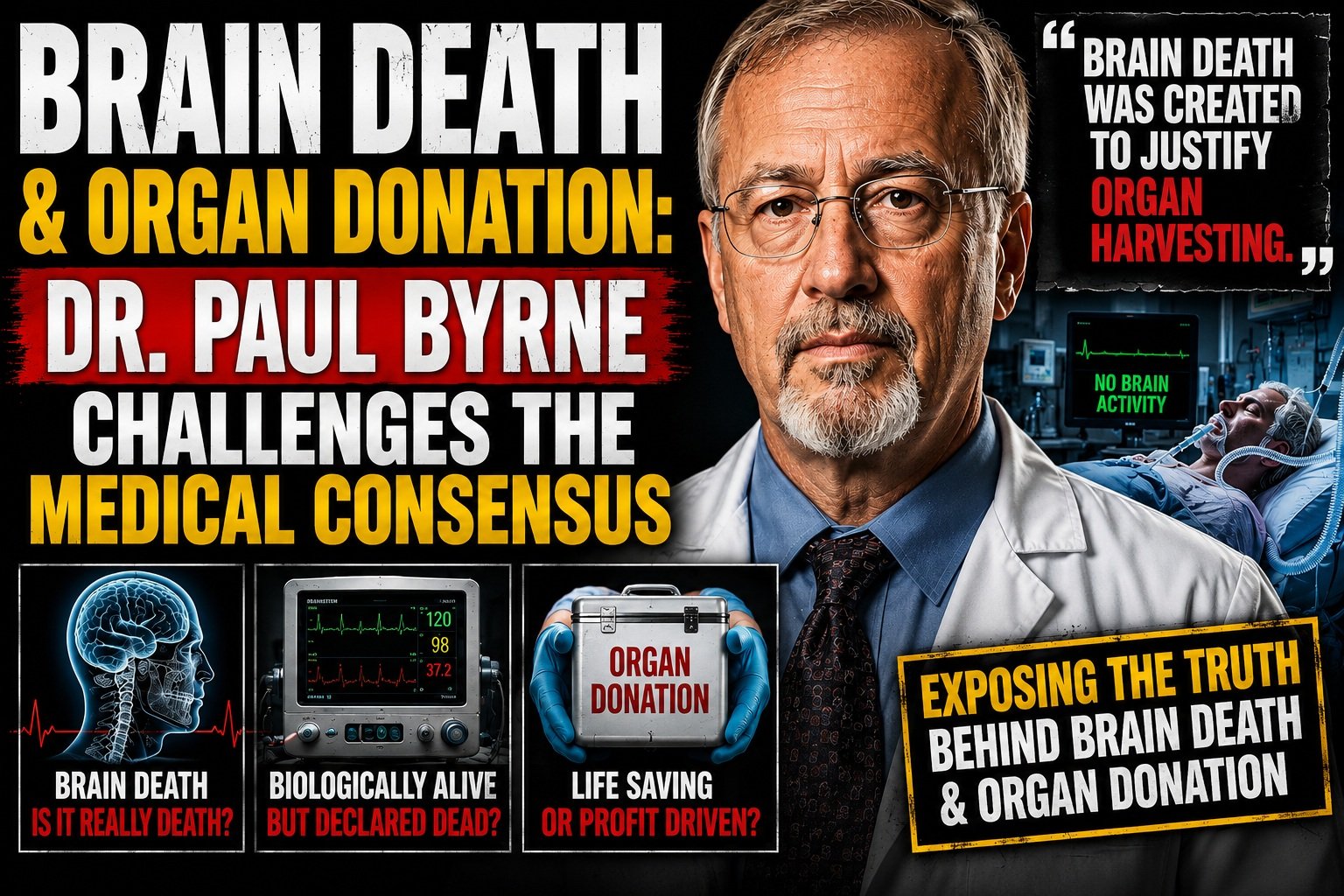
Brain Death & Organ Donation: Dr. Paul Byrne Challenges the Medical Consensus.
When is a person actually dead?
That seemingly simple question becomes extraordinarily complicated when modern medicine can maintain a patient’s heartbeat and circulation even after catastrophic and irreversible brain injury.
In This Investigative Interview, Dr. Paul A. Byrne challenges the medical definition of brain death and raises difficult questions about its history, diagnosis and relationship to organ transplantation.
Byrne argues that the concept of brain death can blur the distinction between irreversible brain injury and death of the entire person. His position has been controversial for decades and directly challenges the prevailing medical and legal framework used in the United States.
In this Investigation, We Examine:
What doctors mean by “brain death” How brain-death criteria developed
The historical connection between brain-death criteria and transplantation
Dr. Byrne’s objections to the concept How brain death is clinically determined
Why patients can continue to have a heartbeat and circulation after brain death is declared How organ donation works after a death determination
The ethical debate surrounding organ procurement
Questions about conflicts of interest and public trust
Whether rare errors in death determination justify changes to existing safeguards
The difference between coma, severe brain injury and brain death U.S. transplant authorities describe brain death as irreversible cessation of all brain activity and emphasize that the donor hospital pronounces death before organs are recovered.
There are also two principal pathways for deceased donation: donation following neurologic determination of death and donation following circulatory determination of death. At the same time, the medical literature acknowledges that brain-death determination has generated continuing ethical and scientific debate, including questions about terminology, diagnostic criteria and the relationship between neurologic death and death of the person. So where does the evidence lead? Is brain death a medically sound definition of death—or does it leave unresolved questions that deserve greater scrutiny?
This investigation presents Dr. Byrne’s arguments alongside the broader medical debate and asks viewers to examine the evidence for themselves.
CobraHunt — Truth Has Fangs.
This video is for informational and documentary purposes. It is not medical advice and should not be used to make decisions about organ donation, medical treatment, or end-of-life care. Speak with qualified medical professionals regarding personal medical decisions.